
October is ADHD Awareness Month and the theme for 2021 is ‘Reframing ADHD: Discovering New Perspectives. COSRT’s Events Support Officer Devika Chowdhury gives her personal perspective on ADHD and its impact on sex and relationships.

I’m a Sex and Relationship Therapist at Sassonage Therapies. As ADHD Awareness Month draws to a close I am going to tell you why understanding the impact of ADHD on sex and relationships is important to me.
The first memory my Mum has of my potential ADHD (Attention Deficit Hyperactivity Disorder) was when I was around 3 years old. Apparently, my nursery highlighted to my parents that I tended to “zone out”, my eyes would glaze over, and I would be “gone” for a while, they believed that I would grow out of it.
In November 2019, during Supervision, I was explaining why I wanted to try EMDR (Eye Movement Desensitization and Reprocessing) therapy. While training to become a therapist, I had learned about disassociation and recognized that I would often “disconnect” my eyes during conversation, although my mind was still active and engaged.
I have done it my whole life so family and friends are used to it, but I cannot stand it. I feel so rude, and it is very frustrating that people might feel I’m not interested in what they are saying when I am.
I had heard good things about EMDR’s ability to reduce the frequency of disassociation, so I wanted to give it a go.
I was busily chatting away while my supervisor listened and asked me questions, then when I was done, she put forward an alternative possibility; could it be ADHD?
The suggestion felt ‘pretty out there’ as I am not a hyperactive person, in fact, my family would describe me as the opposite, I am essentially a sloth. My supervisor encouraged me to investigate further with the outlook that if it’s nothing, then it’s nothing and if it’s something, then maybe it’s something.
On 12th February 2021, I was formally (finally!) diagnosed with combined type ADHD. It was a very happy day for me. I realised that maybe, just maybe, life didn’t have to be quite so hard every day.
From my original conversation with my Supervisor to diagnosis (a very short journey compared with most), I had become fixated on learning everything that I could about ADHD. Each moment was a revelation to me.
I learned that I am not broken, or slow, or lazy, or a failure, or not trying hard enough, my brain is simply wired a little differently. Years of being on and off anti-depressants and anxiety medication (with no formal diagnosis of either), years of being in therapy and trying to ‘fix’ myself, years of feeling left behind and standing out from the crowd. Years of feeling that my gravestone would just say “She had so much potential” and that even in death I would still not understand what on earth that terrorising sentence meant.
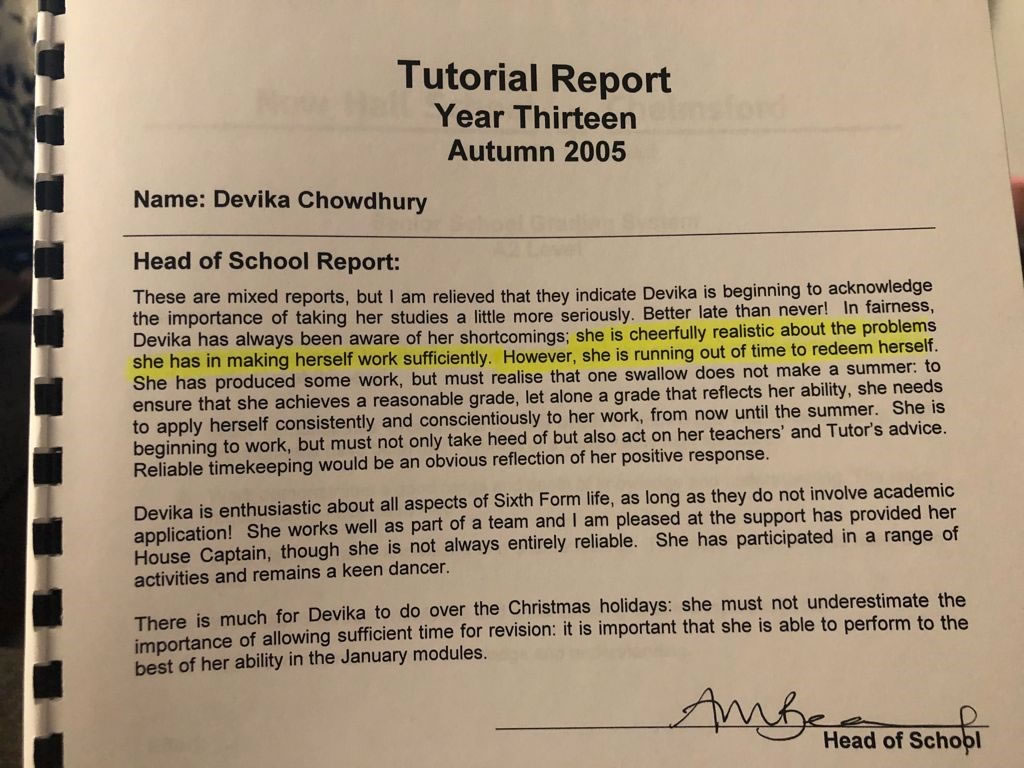
I finally get it; I DO have potential and I literally HAVEN’T been able to access it!!!
So, what actually is ADHD?
Well for a start, popular beliefs tend to stem from the original research that took place in the 50s which held that ADHD:
- only occurred in children and that they would grow out of,
- it only occurred in boys,
- the main symptom was ‘being naughty’ and
- it was caused by bad parenting and a poor diet.
Despite more recent research disputing all of that, these are still the popular views that are held by mainstream society about ADHD and to be honest, those were pretty much my views too until my own journey began.
ADHD is an umbrella term to describe a neurological disorder that impacts the parts of the brain that help us to plan, focus on, and execute tasks. It is a developmental impairment of the brain’s executive functions and is more difficult to diagnose in girls and adults.
3 Types of ADHD
There are three different types of ADHD, depending on which symptoms are strongest in the individual:
- Inattentive (not being able to keep focus),
- Hyperactive (excess movement that is not fitting to the setting)/ Impulsive (hasty acts that occur in the moment without thought), and
- Combined (a mixture of the two).
The symptoms can be severe and can cause difficulty at school, at home, or with friends.
The cause of ADHD?
The cause of ADHD is not yet known, but current research shows that genetics plays an important role. I see this anecdotally with many parents being diagnosed shortly after their children. Brain imaging studies and other research show many physiological differences in the brains of individuals with ADHD.
The cure for ADHD?
There is no cure for ADHD but it can be managed in a number of ways, including advice, support and medicines.
60% to 70% of adults with ADHD will have co-occurring conditions, such as learning difficulties, anxiety, mood disorders, or substance abuse.
Spending a lifetime being criticised for not being able to do ‘simple’ things that you should be able to do, like being on time to meet friends, is going to get you down.
This is something that I struggled with for most of my life. For the most part, I had put it down to the culture of ‘asian timings’ but now I know differently.
Time blindness is one of many symptoms of executive dysfunction, which is very common in people with ADHD.
Executive function is often described as “the management system of the brain.”
It is a set of cognitive skills and processes that are necessary for self-control and managing behaviours. These skills are usually developed throughout childhood, with attainment in or before the early 20s, this is why ADHDers can present or behave as younger than their age.
We use these skills every day to learn, work, and manage daily life, they include self-control, working memory, and mental flexibility.
They enable us to do things like plan, focus attention, remember instructions, follow directions, control emotions, juggle multiple tasks successfully, set and attain goals and get things done.
Executive dysfunction means that the above becomes incredibly challenging.
As a result, adults with ADHD may have issues with relationships or social interactions but it’s important to remember that they cannot always help their behaviour.
With all of that going on, it is no wonder that this group of neurodiverse people are struggling with their relationships and sex.
When it comes to having sex, dating or trying to maintain a relationship, there is a myriad of issues to factor in. From
- the initial hyper focus or fixation on another individual,
- to rejection sensitivity dysphoria (RSD) messing with your feelings,
- to hypersexuality and the obvious desire discrepancy,
- to distraction when your partner is trying to communicate or connect with you,
- to dopamine seeking and impulsive behaviours leading to cheating or other harmful behaviours,
- to low self-esteem making you vulnerable to abusive relationships,
I could go on but I hope that is enough to pique your interest.
This year, I spoke with Ned Hallowell about how we, as therapists, can work differently to support adults with ADHD.
I’ve told you about a lot of the bad stuff, but there is a ton of good stuff about having ADHD too. We are
- kind, funny and creative,
- we think outside the box,
- we are resilient and passionate about justice,
- often very intelligent and
- when we hyper focus we can get all of the things done.
Ned’s strength-based approach is so refreshing after a lifetime of people pointing out the things that I cannot do and offering solutions that are not designed to support the way that my brain is wired. Our conversation on The Impact of ADHD on Relationships and Sex is available and I hope will shine a light on a new way of thinking for you too.
ADHD Resources I recommend:
- Ned’s Website: you can buy his book ADHD 2.0 from https://drhallowell.com/
- A great book on Relationships & ADHD
- A book about ADHD and sex
- How to ADHD- YouTube Channel- highly recommend!
- Facebook Group/Pages
- A National Independent Charity in the UK
- An article about a woman who was diagnosed with ADHD in her 30s
- Information about the ‘Right to Choose’ a provider for an ADHD assessment