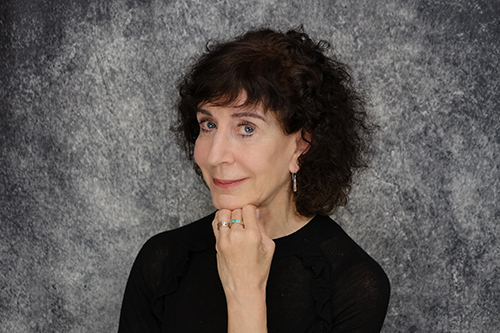
Dr. Janice Hiller, Consultant Clinical Psychologist and sexologist. She was formerly Head of Sexual Health Psychological Service at Goodmayes Hospital, and then joined Tavistock Relationships as Academic tutor in Psychosexual Studies.
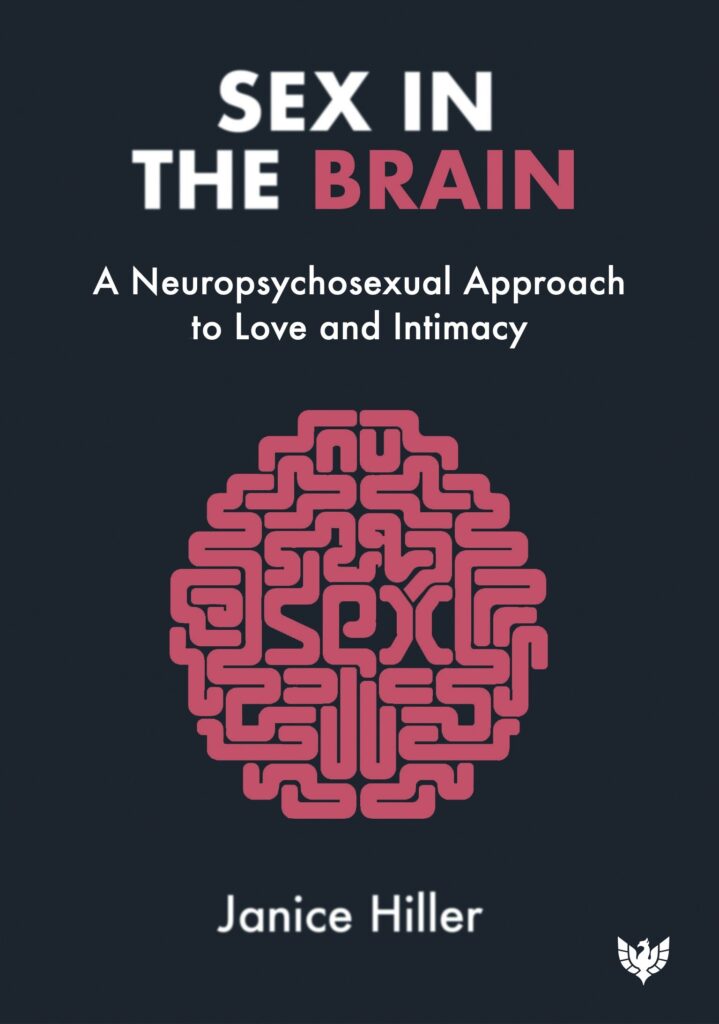
COSRT: Today, we are delighted to welcome Dr. Janice Hiller, Consultant Clinical Psychologist and sexologist. She was formerly Head of Sexual Health Psychological Service at Goodmayes Hospital, and then joined Tavistock Relationships as Academic tutor in Psychosexual Studies. Since leaving, Janice has developed her ideas on a neuropsychosexual approach to relationship issues. She has a private practice in North London. Her extensive research, particularly her book Sex in the Brain, offers a groundbreaking approach to understanding how the brain influences intimacy, attraction, and emotional connection. Drawing on her academic background and clinical expertise, Janice provides a fascinating bridge between neuroscience and therapeutic practice, making complex scientific concepts accessible and relevant for therapists. We’re excited to explore her insights on how neurobiology can inform and enhance therapeutic work in this area.
COSRT: Thank you for joining us today. Let’s start by discussing what first sparked your interest in the neurobiology of sexual arousal and relationships.
Janice Hiller: Certainly! My interest began while I was researching a chapter on biopsychosocial development in the early 2000s for a book I co-edited with two colleagues, titled Sex, Mind and Emotion. During this process, I turned to Jaak Panksepp’s extensive research in his book. Affective Neuroscience. His research on neuropeptides like oxytocin and vasopressin, and their influence on the mating behaviour of rodents, really caught my attention. These neuropeptides and their potential implications for human behaviour intrigued me immensely.
COSRT: Fascinating! How did your interest evolve from there?
Janice Hiller: Well, it wasn’t long before I became completely engrossed by neuroscience and its applications to human relationships. I started reading more widely on the subject, and then, when I joined Tavistock Relationships as an academic tutor, I had the opportunity to create a training day on the neurobiology of sexual arousal and desire. This allowed me to develop my thoughts further. Each year, I updated the material as I kept discovering new research, especially on the use of scanning techniques like fMRI and PET scans. I started including some of the concepts with patients to help them understand their responses. That continuous exploration is what eventually led me to write a book on the subject.
COSRT: That sounds like quite an exciting journey. But, with such complex topics, were there any challenges you faced along the way?
Janice Hiller: Oh, absolutely. One of the biggest challenges was the scientific literature itself. Most studies are written in highly technical language for specialists in neurochemistry and neuroendocrinology., which made them hard to understand. So, I had to essentially teach myself, cross-checking online and with textbooks to grasp the terminology and concepts. While I had a background in science from A levels, and neurophysiology from my clinical training, the depth of these studies meant I had to push the limits further.
COSRT: It must have been quite a steep learning curve.
Janice Hiller: It certainly was! There were times when I thought, “I can’t get a grip on this topic.” But I persevered, sifting through papers and gathering what I could to create a cohesive narrative. The next hurdle was to show how the research was not just theoretical but was applicable to therapeutic practices. Although I had been using neuroscientific ideas where appropriate with patients for some time, I wanted to explain it properly for the reader. Empirical studies are often written purely for the progression of knowledge, and rarely include practical application. The challenge became how to translate these findings into something relevant for therapists working with intimacy, and sexuality.
COSRT: That’s quite an impressive feat. How did you bridge that gap between the scientific data and its application to therapy?
Janice Hiller: It took a lot of time and effort, but I spent countless hours figuring out how to make the science accessible and meaningful. The key was to understand the fundamental neuroscience and then contextualise it in a way that would resonate with therapists. For instance, I used case studies to show how neurobiology might play out in therapeutic contexts. This helped me bridge the gap between theory and practice. It also meant I had to be very clear in my writing, as I wanted to make sure that the science didn’t overwhelm the reader, but rather enhanced their understanding of therapeutic processes.
COSRT: And how did the process evolve once you decided to write a book?
Janice Hiller: That was a natural next step. By then, I had already delivered several training days, lectures and workshops, and I was constantly updating my PowerPoint presentations and reading more about the science. Writing the book allowed me to pull all of that material together and refine my ideas into a comprehensive resource. But, as I mentioned earlier, the challenge was to make sure the complex neuroscience wasn’t just an academic exercise—it had to speak directly to therapists in a way that was not only engaging but practically useful.
COSRT: It’s clear that your work has a real impact on the field. Before we wrap up, do you have any advice for those looking to explore the neurobiology of relationships and its application in therapy?
Janice Hiller: My advice would be to start by reading broadly—don’t just stick to the neuroscience, but also delve into how it intersects with psychology, sociology, and relationship therapy. It’s a multidisciplinary field, and the more perspectives you can integrate, the more well-rounded your understanding will be. Also, don’t be afraid to look at the scientific papers—even if they seem intimidating at first. Take your time with them and seek out resources that can help explain the terminology. Finally, I’d say that the real value in this research is its application. I hope there are ways of using our growing understanding of neurobiological underpinnings to improve the therapeutic outcomes for individuals and couples.
COSRT: That must have been a very rewarding process. Was it difficult to apply this research to your own patients?
Janice Hiller: As I became more confident I was able to use the research findings in therapy. I didn’t just want to apply them without understanding the theory behind them. But once I got comfortable with it, I could apply this knowledge in a way that made sense and seemed to benefit my patients.
COSRT: And that really comes across clearly in your book. As someone without a scientific or therapeutic background, I found it incredibly informative.
Janice Hiller: I’m so pleased to hear that. I was really thinking of people like my friends when I was writing it—those who aren’t therapists or don’t have a science background. I wanted them to be able to understand and find the content useful, especially in terms of how it relates to their own lives.
COSRT: I think that’s such an important aspect of the book. It’s not just about understanding the science but also about applying it to our everyday lives, and to understanding ourselves and others better. I think it’s a brilliant tool.
Janice Hiller: That means a lot, thank you. I was hoping it would be something that everyone could take away something from.
COSRT: Absolutely. Now, in your research, were there any surprising findings that stood out to you?
Janice Hiller: Yes, there were a couple of things that really caught me off guard. For instance, when I was looking into infidelity, I found some convincing evidence suggesting a genetic link, specifically related to a specific form of a dopamine receptor—called the DRD4 receptor.
COSRT: That’s interesting! Could you explain a bit more about that?
Janice Hiller: Sure. It was quite surprising to me because when we look at cases of infidelity in relationships, we often see that one partner’s history of infidelity is linked to patterns in their family—such as their parents or grandparents also experiencing infidelity. So, finding this genetic connection was illuminating. Carrying this gene increases risk but does not, of course, determine behaviour. We have choice and decision-making capacity through prefrontal cortex pathways. However, the gene research adds another layer to the complexity of relationships.
COSRT: That’s quite striking. It also seems a bit daunting.
Janice Hiller: Yes, and we have to be very cautious with that kind of information in therapy. It would not be helpful to say to a couple, “Well, it’s in your genes, so you’re destined to repeat these patterns.” That’s not accurate or productive. Instead, the challenge is to use this knowledge to inform the therapeutic process—both between the couple and to help clinicians have more tolerance and compassion towards a couple’s situation.
COSRT: That really makes sense. It brings to mind some of the philosophical questions about free will, doesn’t it?
Janice Hiller: Exactly. It does make you think about free will and whether we’re constrained by our biology or have the power to choose. But ultimately, I think we do have that power, because humans have the ability to exercise rational thinking through the prefrontal cortex. Part of changing behaviour through therapy emanates from awareness and choice, which essentially entails creating new neural pathways
COSRT: But, of course, love and emotions can make that kind of rational thinking difficult, right?
Janice Hiller: Yes, exactly! Love and strong emotions have been shown to block rational thinking and judgment, and that’s the dilemma we often face. The brain’s emotional systems sometimes override the assessment and judgement systems, and that’s where things can get out of control in relationships.
COSRT: It’s incredible how complex human behaviour can be.
Janice Hiller: It really is. There’s so much more going on in our neural pathways than we could ever fully comprehend.
COSRT: Before we finish up, were there any other findings that stood out to you during your research?
Janice Hiller: There was one other thing I found really interesting. When working with couples, there’s often this overwhelming sense of disappointment in the room. People come in with their rows, their family issues, and a lot of negative emotions—anger, hostility, resentment. But at the core, what they’re really expressing is disappointment. They feel that their partner isn’t what they expected or hoped for. It’s not necessarily about betrayal or infidelity, but rather a deep sense of disappointment in the way the relationship has unfolded.
COSRT: That’s such a profound insight. How do you address that sense of disappointment in therapy?
Janice Hiller: There is a delicate balance here, and what I discovered is a specific brain region that assess unexpected negative events, i.e. disappointment, and this impacts on dopamine, the drive and motivation neurotransmitter. That is when partners can withdraw. Much of the time, the source of disappointment is unrealistic expectations or unmet needs. Helping couples confront and reframe those feelings can be therapeutic. In a positive outcome, couples can acknowledging the disappointment without letting it define the relationship. Of course, another positive outcome is that people decide to separate with apportioning guilt and blame.
COSRT: As we conclude, I’d like to say how much I enjoyed your book and I’ve taken many insights from it despite not being a therapist myself. I’m sure many specialist therapists will find useful and thought provoking things inside as well.